
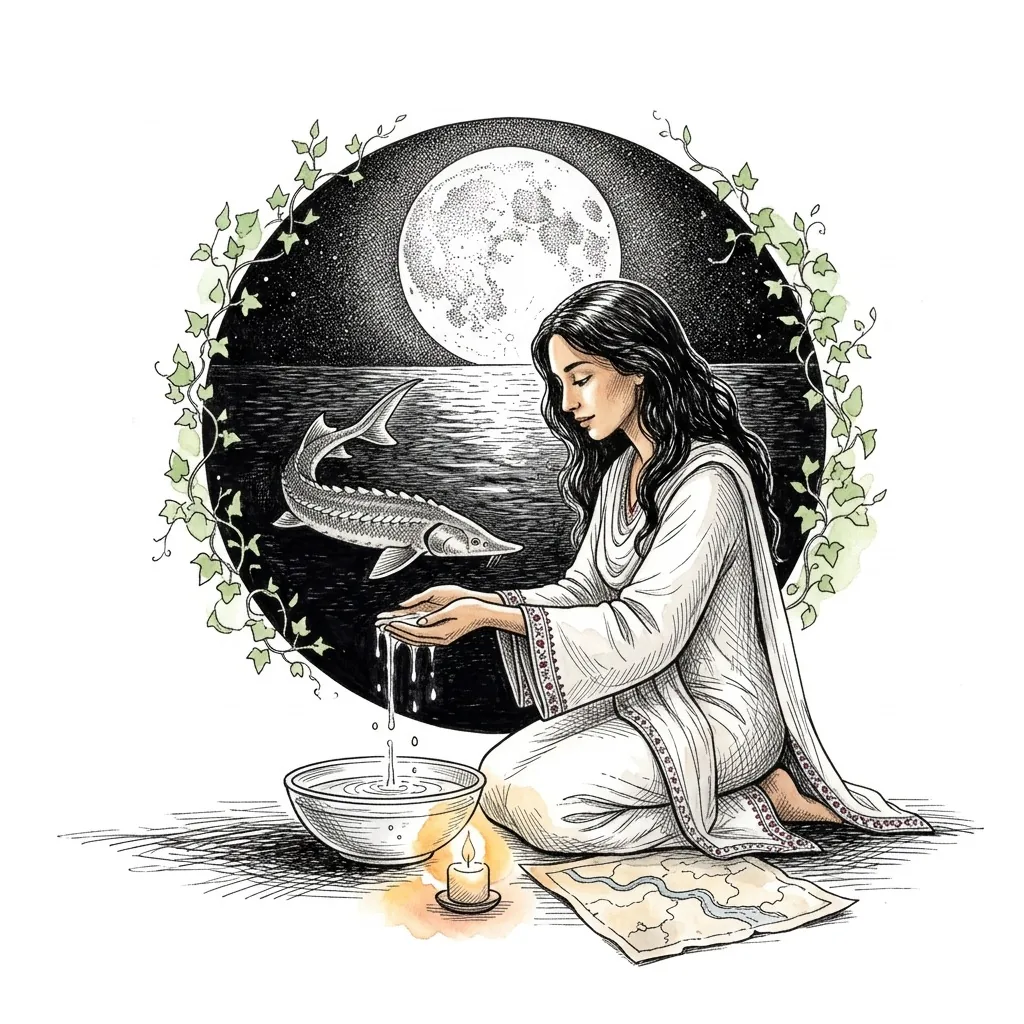
A simple ritual, with a nurse’s eye on safety
Dear one,
Moon water may be the gentlest ritual there is. You set a jar of water beneath the moon, you give it an intention, and the next morning you have something to carry that night’s meaning into your day.
Here’s how to make moon water, how to keep it safe (especially if you plan to drink it), and the many ways you can use it. I’ll also be honest with you about what moon water can and can’t do, because you deserve both the poetry and the facts.
What is moon water?
Moon water is water that has been left out under the moon, usually overnight, with an intention. Many women make it at the full moon, when the light is brightest, but you can make it at any phase.
Let me be clear as a nurse. There’s no evidence that moonlight changes water in any measurable way, and moon water won’t heal, cure or treat anything in your body. What it can do is real in a different way. It turns an ordinary glass of water into a reminder: of an intention, of the moon’s rhythm, of a promise you made to yourself. Its power is in your attention.
What you’ll need
- Water. If you plan to drink it, use safe drinking water: the same water you’d happily drink from your tap or a bottle. If it’s only for plants, cleaning or anointing, any clean water will do.
- A clean glass container with a lid. For drinking, use a food-safe glass jar or bottle that’s been washed in hot, soapy water and rinsed well. Avoid decorative glass, vintage pieces or anything not meant for food.
- A piece of paper and a pen (optional), for your intention.
That’s all.
How to make moon water: step by step
- Choose your night. Look up the next full or new moon. (More on each below.)
- Wash your jar well and fill it with water, leaving a little room at the top.
- Put the lid on. A covered jar keeps out dust, insects, pollen and anything that might drop from above. Moonlight passes through glass just fine.
- Hold it and set your intention. Rest both hands around the jar. Take three slow breaths and say your intention aloud, or write it on a small slip of paper and tuck it under the jar.
- Place it in the moonlight. A windowsill or a safe spot outdoors works well. Clouds don’t cancel the moon, and neither does a window.
- Bring it in early. Collect your jar first thing in the morning, before the sun warms it.
- Label it with the date and the moon phase, and refrigerate it if you plan to drink it.
Safety first: how to keep moon water safe
This is the part most moon water guides skip, so please read it.
Keep it covered
An open bowl outdoors can collect bird droppings, insects, pollen and bacteria overnight. If you want to drink your moon water, keep it covered from start to finish.
Don’t put crystals in drinking water
It’s a lovely image, but please don’t. Some stones contain toxic minerals that can leach into water: malachite and azurite contain copper, and cinnabar contains mercury, for example. Others, like selenite, are soft and slowly dissolve or break down in water. Some stones are dyed or treated, and many are hard to identify with certainty.
If you’d like a crystal to be part of the ritual, set it beside the jar, or on its lid, rather than in the water.
The same goes for flowers and herbs. Only add something to drinking water if you know it’s edible, clean and free of pesticides. Otherwise, place it next to the jar.
Don’t leave it out for days
One night is enough. Water that sits out for days, especially in sunlight or warm weather, is a welcoming home for bacteria and algae.
Use it soon
- For drinking: refrigerate it in the morning and drink it within a day.
- For other uses (plants, a bath, cleaning your altar): use it within a few days.
- Throw it out if it looks cloudy, smells off, has a film on top, or has anything floating in it. Pour it onto the earth with thanks and make a fresh jar next moon.
A full moon water ritual
The full moon mirrors Summer in The Womb Journal’s four inner seasons: fullness, confidence, being seen. Full moon water carries that energy of celebration and clarity.
- On the night of the full moon, fill and cover your jar.
- Hold it to your heart and say: “I see what has grown. I’m ready to see clearly.”
- Write one thing you’re celebrating and one thing you’re ready to release. Tuck the paper under the jar.
- Set it in the moonlight overnight.
- In the morning, pour a small glass. Before you drink, read your paper aloud. Drink slowly, as a promise to carry the moon’s clarity into the month ahead.
Full moon water pairs beautifully with A Full Moon Release Ritual, where you can add a little to a release bath, or with the gentle practice in Full Moon Rituals for Beginners.
A new moon water ritual
The new moon mirrors Winter: rest, deep listening and planting seeds in the dark. You won’t see the moon on this night, and that’s fine. New moon water is about beginnings.
- On the night of the new moon, fill and cover your jar.
- Rest one hand on the jar and one on your lower belly. Take ten slow breaths into your pelvis.
- Ask yourself the Spring question from The Womb Journal: What do I want to call into this cycle?
- Say your intention to the water, as if you were planting it there.
- Set it out overnight, bring it in at dawn, and use it to water a seed or a plant you’re tending. Each time you water it this month, remember what you planted.
For a fuller ritual to pair it with, see A New Moon Ritual to Set Intentions.
How to use moon water
In ritual
Place a small bowl of moon water on your altar while you journal or meditate. Dip your fingers in it to mark the opening and closing of a ritual.
For your intention
Drink a glass slowly each morning for a day, saying your intention before each sip. (Remember: safe drinking water, food-safe container, refrigerated, and used within a day.)
For your plants
Water a houseplant or garden with moon water, especially one you’ve chosen to represent something you’re growing in your life. Let it reach room temperature first.
In a bath
Pour a cup into a warm bath with a handful of salt. Soak while you hold one question in your mind. Plants and baths are wonderful uses for moon water you don’t plan to drink.
For anointing
Dip a fingertip in moon water and touch it to your wrists, your heart and your lower belly, saying a word of blessing. Keep it away from your eyes, and use fresh water rather than water that has been sitting for days.
For cleansing your space
Add moon water to warm water with a pinch of salt and wipe down your altar, your windowsill or your journal shelf as a small act of renewal.
Moon water and your inner seasons
Some women like to make moon water at the phase that matches their body: water from a new moon for their Winter, a full moon for their Summer. If you don’t bleed, simply let the moon lead. There’s no wrong way in.
The Womb Journal holds more than 30 rituals: one for each of the thirteen full moons, thirteen Womb Speaks rituals to connect with your womb, rituals for the new, waxing and waning moons, and ceremonies to honour the beginning and end of your bleed. A jar of moon water is a beautiful companion to any of them, and the book’s 93 days of guided pages give you a place to notice how each intention grows.
If you’d like to begin tonight, the Homecoming, a gentle opening ritual, is in our free Starter Kit, along with a Moon Cycle Tracker to mark each moon you meet.
Why do this on paper?
Your cycle, your rituals and your body’s story deserve better than an app that sells them. The Womb Journal lives on paper, on purpose: it can’t be hacked, sold or breached. What you write belongs to no one but you.
Begin tonight
Your free Womb Journal Starter Kit holds the Four Seasons at a Glance, a Moon Cycle Tracker, a Yearly Period Tracker to bring to your provider, the Homecoming ritual and the Womb Journal Vow. Print it and begin your practice tonight.
The Womb Journal is the whole path: three full cycles of guided daily pages, more than 30 rituals, and a womb prompt and affirmation for every day.
Held with care: this teaching is for reflection and self-knowledge. It isn’t medical advice. If something in your body worries you, please talk to your healthcare provider. Health disclaimer